
by Maria Ashe
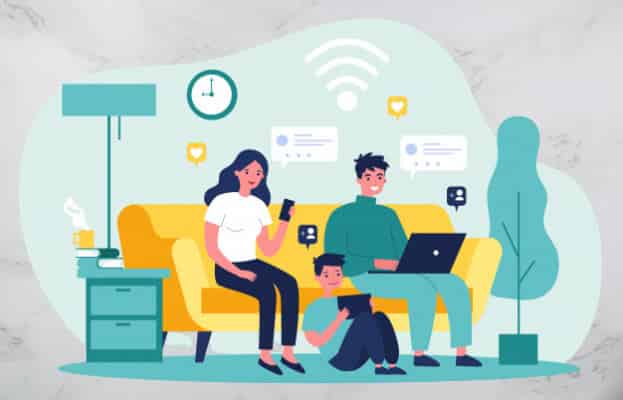
Could you do something real quick? Open the Settings app on your phone, and scroll down until you see a little hourglass icon next to the words “Screen Time.” Does what you see surprise you or not? Based on a recent report, the average American teenager spends about 8 hours and 39 minutes in front of their screen daily. When paired with the fact that in the U.S.,people age 15 and older, spend an average total of 14.99 hours awake per day, These stats set off a few alarm bells. How is it that we are spending more than half of our time awake in front of screens and what is it doing to our brains?
One thing is for sure, we weren’t always this way. The reason for our overwhelming tech usage ties back to the neurotransmitter in the brain called dopamine. Dopamine is typically regarded as the “happy chemical” in the brain, as it is released whenever we do something pleasurable, such as enjoying a sugary treat. Being human, we are naturally hard-wired to seek out activities that release dopamine in our brain’s reward system. This is what makes cell phones and other technology so addictive. Short form video content in particular, such as the content found on apps such as Tiktok and Instagram is manufactured in a way to keep us coming back for that next dopamine hit in the most quick and efficient way possible, i.e mindlessly scrolling through funny videos for hours on end.
Like all issues, Hamden High students have varying opinions on their tech usage. When asked, HHS student Austin Tran jokingly described his technology use as a “happy marriage,” and finds that unwinding after a long day by watching Instagram reels can be relieving. However, other students express a fair amount of discontent about their relationship with tech. Miles Ashe believes that he uses technology and short form videos as a “Crutch when I need easy dopamine.” Shanneah Havana describes her usage as a “mix of healthy and unhealthy.” Another student, Porter Guite notes that, “At home it’s okay, but social media is toxic, and everything is full of subscriptions. I’d have to use a subscription if I wanted something, like Spotify Premium, Hulu, or YouTube without ads.” “Simply put, it’s everywhere.” says Tristen Rountree, an HHS Senior.
Another prime factor that keeps us running back to our cell phones is our inherent need for community and connection. In an age where it is normal to immortalize your life online, all of us seek the validation of a “like” or a comment from time to time. This is especially true after the COVID-19 pandemic, a time when social media was one of our only ways to keep in touch with family and friends. Our need for social connection is rooted in evolution. Since the beginning of time, humans have relied on community and the building of social networks to survive and expand. Essentially, our deep relationship with technology stems from our desire for human connection and validation.
We don’t only rely on technology for solely social or recreational purposes though. Technology has fully integrated itself into the way we run our educational institutions. Teachers have begun to use a variety of online programs to aid in teaching, most notably Google Classroom, Blooket and Kahoot. These programs have caught on in recent years due to their popularity with students and free-to-use features. For students, websites like Quizlet provide students with intuitive and easy-to-use study tools. An anonymous student says, “I’ve definitely come to rely on technology in some way, especially with my education.”
What’s the takeaway? Is it all bad or all good? When it comes down to it, The ways in which we interact with technology are incredibly diverse, and you can’t characterize our relationship with technology in just one word. As Anexie Morton puts it, “Obviously in most cases, it’s very helpful, but our reliance on it (technology) can be very damaging. Take for example today when our Google servers went down. There’s also the attention span shortening that fast content apps are causing, and the genuine addictions we have to our phones.” Throughout the past decades, the use of technology has integrated itself into the fabric of our society, and while that usage has opened the doors for new and innovative ways of learning, socializing, and growing community, as time urges forward we as a society must be willing to keep balance in our lives, online and offline.
Sources:
Screen time in teenagers: how can we manage it? | My Kids Vision.
Here’s Why You Can’t Stop Looking at Your Phone – Lemonade Blog.
Dopamine: What It Is, Function & Symptoms
Discover more from The Dial
Subscribe to get the latest posts sent to your email.
 The Dial