
By Samir Abedin
I was originally planning to do an independent study on the relationship between technology and war, focusing on topics such as CBRN (Chemical, Biological, Radiological, and Nuclear) weapons, AI’s role in modern warfare, cyber warfare, and the ethics of using science in war, as my history teacher wanted to keep me intellectually stimulated. However, halfway through putting together a syllabus, we discovered that HHS had discontinued the independent study program. Despite this, my teacher still wanted me to pursue a project, so we decided I would develop a thesis, research it, and defend it in front of members of the social studies department. I have narrowed my ideas down to four: a comparative analysis of Russian and European existentialism, studying works by Camus, Sartre, Nietzsche, Tolstoy’s later works, a little Chekhov, Simone de Beauvoir, and Dostoevsky (I just started Crime and Punishment, and I am really enjoying it!); a comparative analysis of proxy wars, focusing on Iran and other Middle Eastern countries as well as the dynamics between Russia, and former USSR states and other Eastern European countries; a study of how colonialism affects the economy of colonized countries, perhaps about France and Lebanon; and finally, an analysis of how totalitarianism and authoritarianism are portrayed in literature, focusing on critiques of government in works by Orwell, Kundera, and Steinbeck. In two of these ideas, I’d need to learn how to analyze literature. In my research thus far, I have found many methods, including Marxist criticism, historical and dialectical materialism, and psychoanalytical criticism.
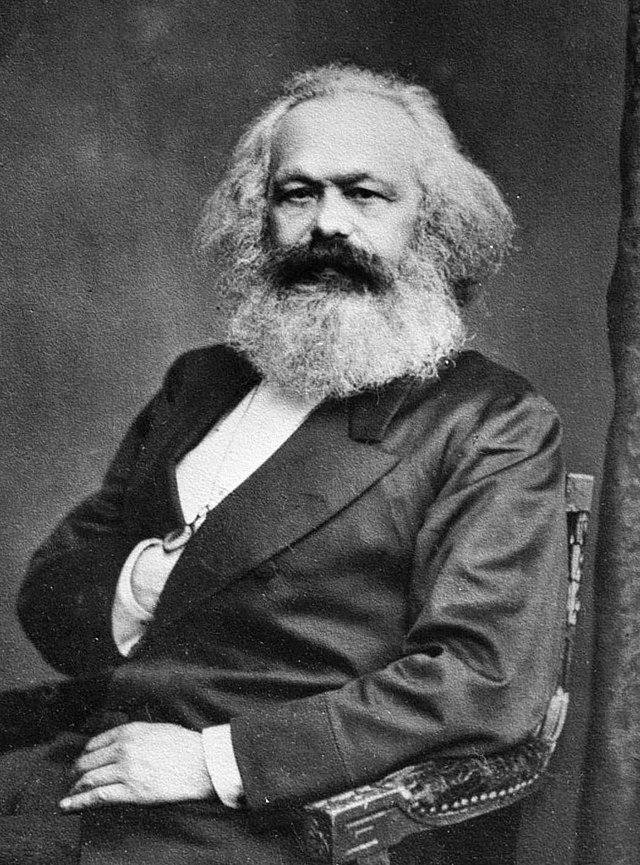
Marxist critiques are a sort of general category of analysis, and you can apply it to any medium, including literature, paintings, photographs, and even music. For literature, Marxist criticism focuses on the author’s experiences, the defense or questioning of systems that justify suffering, and the struggle between different socioeconomic classes and structures. Secondly, a Marxist critique identifies various Marxist theories in action, including hegemony and false consciousness, alienation, and commodification.
Noticing the author’s experience can help acknowledge biases and the author’s personal ideology. For example, in Of Mice and Men by John Steinbeck, the book was written during the Great Depression and Steinbeck came from a poor background, so this novel poignantly highlights the struggles of the working class. The disenfranchisement with the cyclical patterns of capitalism that Steinbeck’s characters experience is similar to his own experiences and critical view about how capitalism affects those of low socioeconomic status.
Seeing how the author experiments with the justification or questioning of a system that perpetuates suffering, like capitalism or patriarchy for example, one could find parallels to modern society. While amorphous, analyzing ideology can really further one’s understanding and help disseminate information. Using classism and Of Mice and Men as an example again, Gone with the Wind by Margaret Mitchell, while generally not considered literature it is still a wonderful contrast to Of Mice and Men, is written by a wealthy woman during the Great Depression and has this sort of romantical view of a more hierarchical South. Steinbeck writes in a way that despite all his character’s dreams are inevitably thwarted, reinforcing the Marxist notion of this false promise of upward mobility for the working class. Mitchell downplays the struggles of the working class, and from a Marxist perspective, it reinforces an idealized aristocratic order. In doing this, one gains a deeper understanding of both texts.
Analyzing class conflicts, especially the struggle between the proletariat (working class) and the bourgeoisie (middle class, or the ruling class in a Marxist context), helps us better understand societal norms and provides insight into characters’ motivations. In The Mysterious Affair at Styles by Agatha Christie, class conflict plays a significant role in the story. Emily Inglethorp, a wealthy widow, is murdered, and the main suspects are her financially dependent husband, Alfred, and her stepson, John, who harbors resentment due to inheritance issues. Though both men have financial motives, their actions are influenced by more than just money—they are shaped by class expectations. Alfred, perceived as a “gold digger,” is viewed with suspicion because of his lower social status and his recent marriage to Emily. On the other hand, John feels entitled to the family wealth, and his bitterness towards his mother’s financial decisions reflects deeper class anxieties. By examining these dynamics, we can better understand the characters’ relationships and the role class plays in their actions. Class dynamics are ubiquitous in literature, systemic classism has been a thing since the early days of feudalism and will be for the foreseeable future.
One can also apply Marx’s more clear-cut theories such as hegemony and false consciousness, commodification, and alienation. Hegemony is the concept that the ruling class will maintain its control over society by changing the cultural, ideological, and moral norms to reflect the existence of a ruling class as natural and beneficial. False consciousness is a state of mind that prevents people from recognizing an injustice taking place, or acting against their own interests due to a societally imposed ideology. A real-life example of false consciousness is the belief in meritocracy, believing that the people at the proverbial top got there with hard work rather than exploitation and systemic privileges. A clear example of Hegemony is in The Crucible by Arthur Miller, taking place in a heavily religious time during the Salem witch trials and members of the clergy had very high socioeconomic status. The characters believed that they were supposed to be oppressed, as Reverend Parrish and other characters had been divinely ordained. This is an example of theocratic hegemony, as the characters blindly went along with the various Reverend’s schemes, viewing them as fate. Analyzing hegemony can help gain an understanding of the dominant ideology at the time the book was written and a greater understanding of the historical context. Hegemony is also ubiquitous to some degree, and it has been throughout history. One could see hegemony, in its early most base forms, the Machiavellian school of thought is one of the earliest that comes to mind.
Commodification is a condition that Marx thought would happen in a capitalistic society in which everything, including human interactions, labor, and love, would be assigned an economic value. Marxists believe that because of commodification, capitalistic societies reduce valuable human experiences and social interactions into marketable goods. Commodification can lead to dehumanization and ableism if people are lessened to how much they can produce, or whether or not they can meet some arbitrary quota of contributing to society. An example of this is in the wonderful Mistborn trilogy by Brandon Sanderson. There are the Skaa, enslaved people whose only purpose in existence is to further the economy of Luthadel, like serfs. The Skaa are commodified to only how much they can produce, viewed only as economic fodder for the Lord Ruler’s empire, and treated as disposable. Because of this dehumanization, the protagonist, Vin, goes on to overthrow the Lord Ruler.
Alienation is the separation of oneself from a given commodity, one’s labor, or others. Alienation from others, Marx theorized, would be caused by a commodified environment, because of the societally imposed need for self-sufficiency and independence, and a generally competitive environment. Alienation from one’s labor can happen when it is commodified, and treated as merely transactional. As one could see, commodification leads to alienation. Analyzing Marx’s theories in a piece of literature can help one gain a deeper understanding of the social and political systems and ideologies in place at the time.
So, in conclusion, one should write a Marxist critique as it can help one’s ability to think critically, uncover hidden meanings and social commentary, and evaluate the role of the author and their biases.
Discover more from The Dial
Subscribe to get the latest posts sent to your email.
 The Dial